

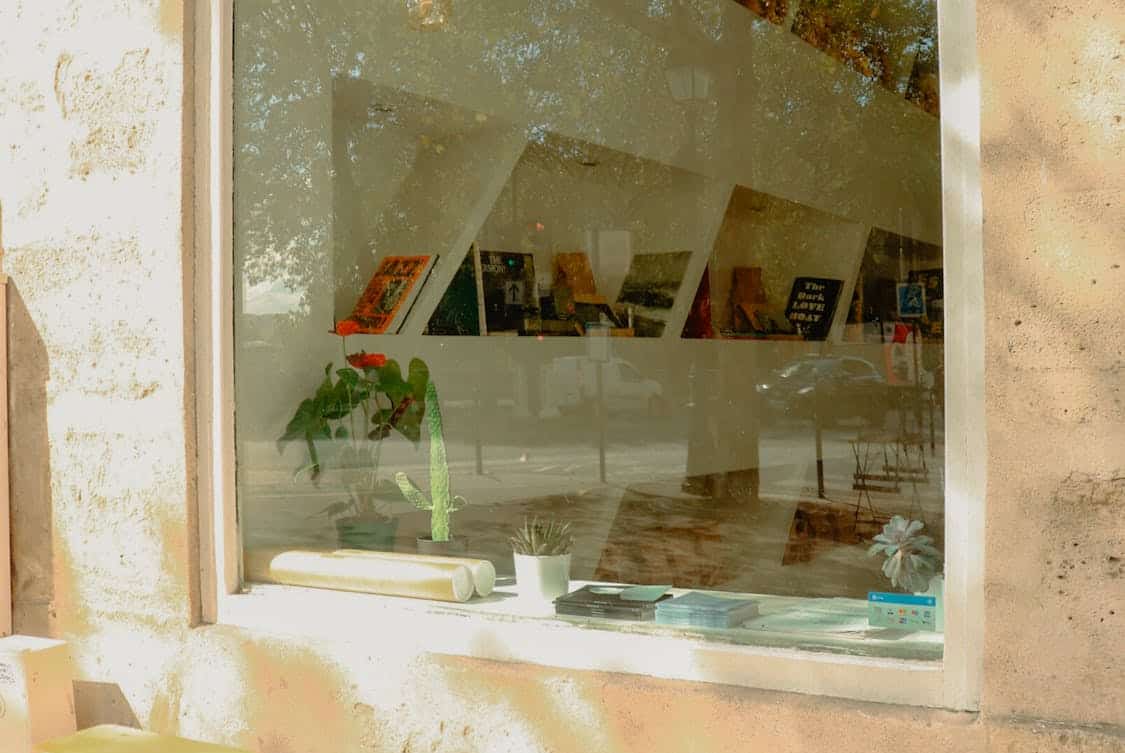
Retailers face a constant challenge with storefronts: how to draw customers in while also protecting goods. The use of commercial glass tint changes everything from how well people can see your displays to the amount of natural light inside.
We’ll walk through the facts about sight lines, light levels, and product appearance to give you the practical knowledge you need to choose a tint that perfectly fits your business.
What Is Commercial Window Tint
Commercial window tint is a thin film applied to glass that alters how light and heat pass through storefront windows. It comes in several grades, from sheer films that barely dim to dense films that cut glare and block high percentages of UV rays.
The film may be metalized, dyed, or ceramic, and each type brings a different mix of visual effect and performance. Installers can apply it to new glass or retrofit older panes, and results depend on film quality and fit.
How Tint Affects Visual Clarity
Tint influences display clarity by changing contrast, saturation, and perceived sharpness of items near the glass. A mild tint can reduce midday glare and keep products from washing out under harsh sun, while a dark film can make window displays look muted from the sidewalk.
Reflections are cut when tint has anti-reflective properties, which helps a viewer see merchandise rather than their own reflection. Keep in mind that film color and finish play a big role in how true colors will appear.
Impact On Brand And Merchandise
The visual character of a storefront is part of brand language, and tint shifts that language in subtle ways. A sleek, slightly shaded pane can read as upscale or modern, lending a curated feel to a display, while heavy tint might feel closed-off or secretive if not balanced with lighting.
If you’re exploring ways to balance aesthetics with performance, reviewing different commercial window tinting options can help you find the best fit for your store’s look and lighting needs.
Product type matters: delicate florals and pastel goods often need brighter, truer light than industrial or high-end leather pieces that can thrive in lower glare. Merchants should line up visual goals with tint choice so the window becomes an asset, not a mismatch.
Controlling Light And Glare

Managing sunlight is a big reason retailers choose film; glare can flatten textures and make signage unreadable from certain angles. Tint films reduce the intensity of direct sun, which helps staff avoid eye strain and keeps interior lighting consistent across the day.
A controlled light environment also lets stores use accent lamps and spotlights more effectively to shape viewer focus. In short, tint gives retail teams one more lever to tune the display mood.
Energy Efficiency And Climate Control
Tint reduces solar heat gain by blocking parts of the infrared spectrum, easing the load on air conditioning systems in warm months. Savings show up on energy bills over time, especially for large glass frontages that get long daily sun exposure.
Some films also keep interiors warmer in cool seasons by lowering conduction losses, though performance varies by product. When budget and building age are in play, tint can be a practical retrofit that balances comfort and cost.
Security And UV Protection
Many commercial films offer an extra layer of security by holding shattered glass together after impact, which acts as a deterrent to smash-and-grab attempts and slows forced entry. UV-blocking properties are common too, protecting fabrics, printed media, and merchandise from fading; this preserves display life and reduces replacement costs.
That said, security films are not the same as full security glazing and are best used as part of a broader plan. Combining film with good locks, alarms, and policy usually gives the best results.
Types Of Commercial Tint Films
There are several families of film, including dyed, metalized, hybrid, and ceramic, each tuned for particular trade-offs between reflectivity, heat rejection, and clarity. Dyed films are cost-effective and cut visible light, but can fade; metalized films have strong heat rejection but introduce reflections and sometimes interfere with radio signals.
Ceramic films are pricier yet offer balanced performance with minimal color shift and no signal disruption. Picking the right type means matching film traits to display needs, climate, and budget.
Installation And Maintenance Basics
Professional installation matters: a poorly applied film will bubble, peel, or show streaks that draw the wrong kind of attention to a storefront. Installers clean glass, measure precisely, and trim films to fit frames and mullions, which makes the finished look seamless.
Aftercare is simple but specific: wait the recommended cure time before cleaning, use non-abrasive cleaners, and avoid sharp tools against the film. Maintenance routines keep the display crisp and extend the film’s service life.
Local Rules And Permits
Many jurisdictions set limits on how reflective or dark storefront glazing can be, usually to maintain street visibility and preserve the look of shopping districts. Permit requirements and code limits vary, and some historic districts impose stricter rules to keep building facades consistent.
It is smart to check municipal guidelines and, where needed, secure approvals before work begins to avoid fines or forced removal. Working with an installer familiar with local code reduces surprises.
Cost, ROI, And Practical Tips
The sticker price for film and installation depends on film type, glass area, and labor rates, with basic films being the cheapest and high-performance films carrying a premium. Return on investment is driven by energy savings, reduced fade-related replacement, and sometimes improved sales from better-looking displays; quantify these where you can.
Small trials help: tint a single bay, monitor foot traffic and sales, and adjust if the result clashes with how merchandise reads. A little test can save a lot of second-guessing down the road.
