

Imagine scanning a local park in 2022 to earn a handful of Pokéballs, only to find out years later that the visual data you uploaded is now helping a delivery robot navigate a crowded sidewalk in Helsinki. That scenario is no longer hypothetical. In early 2026, it became the center of one of the more unusual data controversies in mobile gaming history.
Niantic, the company that created Pokémon GO, spun out its enterprise spatial intelligence division in 2025 after selling the games business to Scopely. That division, now operating as Niantic Spatial, has been using a decade of AR scan data collected through Pokémon GO to train a Large Geospatial Model — essentially a spatial AI system designed to help machines understand and navigate real-world environments.
One of its first disclosed applications was a partnership with Coco Robotics, helping approximately 1,000 suitcase-sized delivery vehicles traverse city streets using visual data that originated, at least in part, from players scanning PokéStops for in-game rewards.
The story went viral for an obvious reason: most players had no idea. Euronews ran a fact-check in March 2026 that attempted to add nuance. The AR scanning feature, introduced in 2020, was opt-in and required players to actively submit scans rather than passively collecting data in the background. It was also only available to players who had reached level 20. The argument that players “technically consented” through Terms of Service has been Niantic’s consistent position.
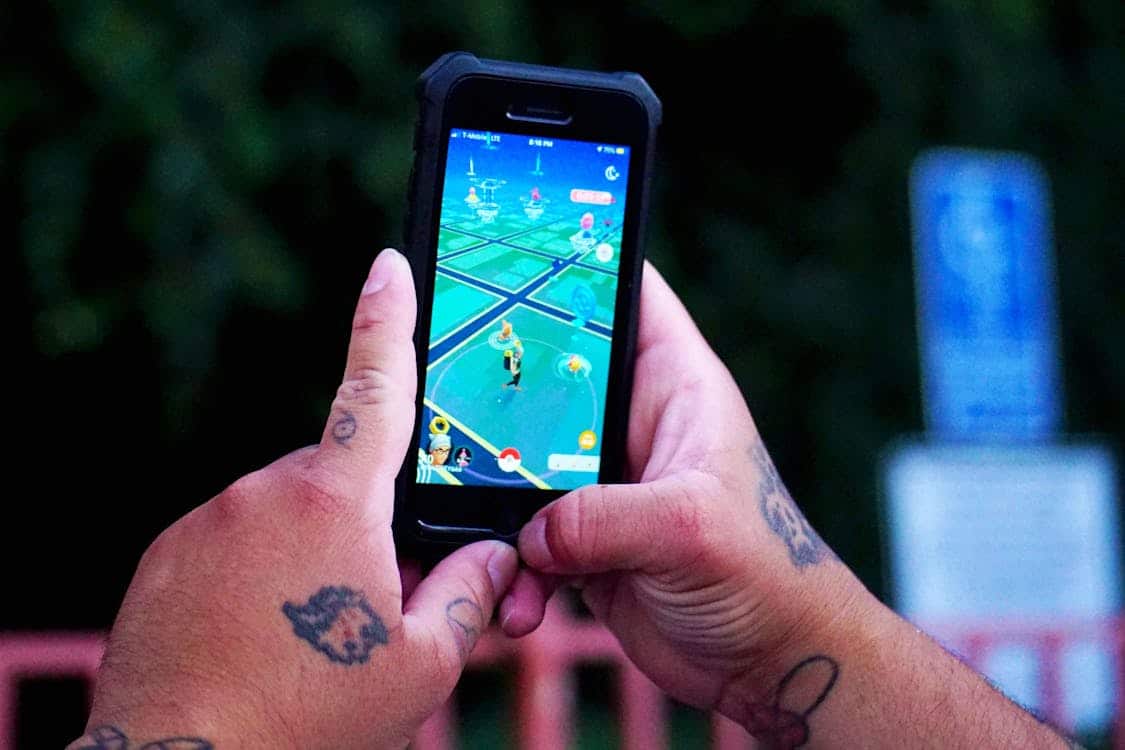
Critics have pushed back on what consent actually means in that context. A player scanning a park in 2022 to earn bonuses was agreeing to help “improve the game” — not to fund the navigation infrastructure of an autonomous delivery network.
The gap between what players understood they were doing and what that data was ultimately used for is wide enough that multiple legal commentators have flagged it as a meaningful ethical problem, even if it doesn’t rise to a clear legal violation under current frameworks.
The controversy has had a notable effect on how players think about the accounts they built during the Niantic era — the level 50 profiles, the shiny legendary collections, the stardust reserves accumulated over years of daily play — which now live inside Scopely’s product while the scan data some of those players contributed belongs to an entirely separate enterprise AI business.
None of this affects gameplay directly. Pokémon GO continues running under Scopely, events are still running, legendaries are still appearing in raids, and the competitive scene is active. But the revelation about how scanning data was used has visibly affected how some players think about their ongoing participation — and about the difference between playing a game and contributing to an industrial data project inside a game’s wrapper.
The Niantic pivot is a preview of where AR gaming is heading. Spatial data collected through consumer apps is becoming a serious commercial asset, and the games that collect it most effectively are the ones with large, engaged, geographically distributed player bases. Pokémon GO fits that description better than almost any other app in existence. The question of whether players were adequately informed about that value extraction is one that regulators in multiple jurisdictions are now paying attention to.
